
The fact that in Burkina Faso, Chad, South Sudan, Niger, Cameroon, Mali, Haiti, Bangladesh, Yemen, Sri Lanka, and other countries in Africa and Asia, millions in international food donations are received surprises no one—it’s not news. But it is news, and shameful, that a country in the heart of the West like Cuba—which in 1958 was approaching First World living standards—now needs international food donations so that many of its citizens don’t die of hunger or reach an irreversible and fatal degree of malnutrition.
Can anyone today imagine 1950s Cuba receiving constant food donations to keep people from starving to death?
It is the “socialist revolution” that starves Cubans
It is because of the “socialist revolution” that the country does not produce enough food. Because in the days when it was “exploited by capitalism,” the country not only fully self-supplied in agricultural and livestock products, but was praised by the FAO as the largest exporter of food in Latin America relative to the size of its population.
The regime of Raúl Castro does not allow the press to publish anything about food donations. It does this mainly so that when the donated food is distributed in ration stores through the libreta system, or blatantly sold at exorbitant prices in GAESA’s shopping centers, it can be passed off as having been imported and paid for by the government—or even produced in the country—and thus claim that Castroist agriculture is not as bad as the “enemy propaganda” says.
Of course, one way or another, many Cubans know that ships constantly arrive on the island with donations of rice, beans, powdered milk, canned meat and fish, flour, sugar, oil, fruit, baby food, juices, and other products.
And not just that—Cuba also receives donations of medicine, medical equipment, personal hygiene products, clothing, footwear, gasoline, oil, donated currency, school supplies, buses, cars, and many other basic goods that Castroist socialism, with its centrally planned economy, is incapable of producing.
The “Yankee enemy” is the one that donates the most food to Cubans
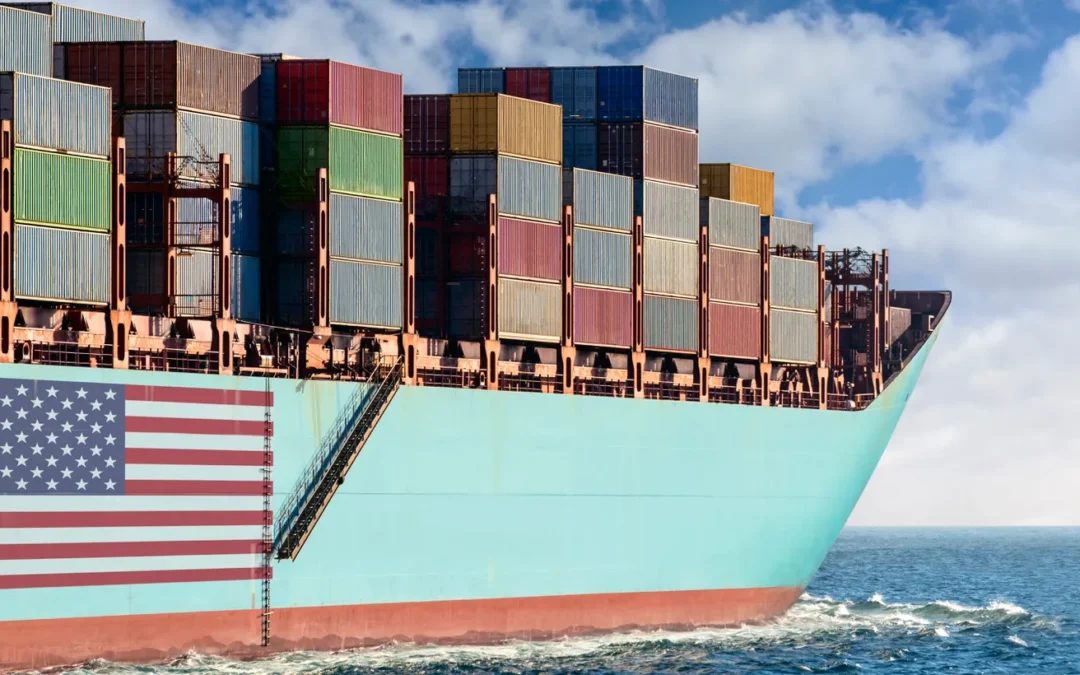
What Cubans do not know—because they have no way of knowing—is that the country that, by a wide margin, donates the most food to Cuba is the “Yankee enemy,” the ogre that “blockades” it: the United States.
In the past 10 years, the U.S. has donated $154 million worth of food to Cuba. No other country in the world has donated even 10% of that amount in food to Cubans.
As the food crisis has worsened, donations from the United States have increased exponentially—by a factor of 41.
In 2014, the “empire” donated $939,705 worth of food. The following year (2015), it jumped to $4.6 million. In 2019, donations rose to just over $7 million. In 2023, they reached $36.5 million, and in 2024, they surpassed $40 million. These are all official figures from the US-Cuba Trade and Economic Council.
That same body (Cuba Trade) clarifies that these statistics do not include donations brought to the island individually by travelers from the U.S. or through third countries, which it says account for a “significant amount.”
UN: More for “gender equality” and climate than for food
And what about the UN? one might ask, since it is the global entity with 195 member countries that should provide the most food donations to fulfill its “Zero Hunger” program.
Well, in a clear display of the leftist “woke” and socialist influence dominating the UN bureaucracy, of the $251 million donated to Cuba over the past four years (2020–2024), only $5.7 million was allocated for food donations.
It dedicated $34.6 million to “gender ideology” through its “gender equality” program and a “new gender-based education model in schools,” in coordination with the National Center for Sexual Education (CENESEX), directed by the dictator’s daughter, Mariela Castro. It also allocated $39 million in the country to the “Climate Action” program.
In other words, the UN gave the Castro regime $74 million for those two secondary categories—one of which is ideological indoctrination—and barely allocated $5.7 million to alleviating extreme poverty, which according to the World Bank and independent studies affects 88% of Cuba’s population, a percentage similar to Sub-Saharan Africa. It gave $48 million to the already near-collapse public health sector.
Meanwhile, the UN’s World Food Programme (WFP) has donated $58 million worth of food to Cuba since 2021 “in support of Cuba’s food and nutritional security.” Of that, 32% came from Russia. That is, Moscow contributed $18.5 million to fight hunger in payment for the regime’s disgraceful submission to the imperial autocracy of Tsar Vladimir I.
In 2022, the WFP provided food to 789,000 undernourished people on the island, according to the UN agency’s Communications Office. It also reported that in 2024, five million dollars were spent on providing “a varied and nutritious diet to boys and girls in primary education.” And that rice, beans, and oil were distributed to “respond to food emergencies in the country.”
It sounds like we’re talking about extremely poor and backward countries in Sub-Saharan Africa or Asia. But we’re actually talking about Cuba—a country that, before communism, had a per capita income that doubled Spain’s, matched Italy’s, and exceeded that of several European countries.
Out of pity, more than 30 countries donate food to Cubans
More than 30 countries from all over the world donate food to Cubans. The communist governments of China and Vietnam each year donate more than 35,000 tons of rice.
Even Mongolia donated to Cuba in June 2024: 400 tons of rice, 107 tons of cooking oil, and 250 tons of grains. The Camagüey radio station Radio Cadena Agramonte reported that the Mongolian donation fed about 50,000 people—including 2,900 pregnant women and 44,600 people in Villa Clara and Cienfuegos “in vulnerable situations,” a euphemism the regime uses to avoid saying “hungry.”
Other countries also donate food: Japan, Algeria, Germany, Spain, France, Switzerland, Sweden, Austria, Argentina, Colombia, Brazil, Mexico, Bolivia, Nicaragua, Venezuela, Canada, Belarus, the United Arab Emirates, Qatar, Saint Vincent and the Grenadines (this tiny Caribbean nation donated 232 tons of flour in 2024), Angola, South Africa, South Korea, India, Djibouti (one of the poorest countries in Africa), and others that can be found online. The European Union also donates as an institution.
And there’s more—or less: even the dictator himself had to set aside his arrogant pride and order powdered milk donations from the WFP. In March 2024, for the first time, Cuba officially asked the WFP for powdered milk for children up to age 7, due to the collapse of domestic milk production. Who would have thought? In 1958, Cuba produced 960 million liters of milk (almost half a liter per person per day), and today it barely produces about 260 million liters.
In short, it is sad—and infuriating—that food handouts are now what sustains a country that, until the arrival of the “revolution,” even exported food.
Roberto Alvarez Quiñones
July 6, 2025